Desalus water & food security
Pure fertilizer from zero-waste water treatment service
Desalus operates resourceful systems such as IChemE Award-winning ZIX-Zak ion-exchange and KNeW Process for 99%+ recovery of clean water and strong production of pure fertilizers, nothing wasted.
Insights
Explore articles, news releases, media and other Desalus content:


KNeW Process
TIA recently invested $1 million into Trailblazer Technologies (a member/investor in the KNeW Company) to further develop the KNeW Process and pilot plant and explore new ion exchange technologies.
The video here shows the KNeW Process proof of concept plant in operations in Johannesburg, South Africa.
">

Pillsbury Law Firm to Represent The KNeW Company in Contract Negotiations
The KNeW Company (KNeW) is pleased to announce that the highly respected international law firm, Pillsbury Winthrop Shaw Pittman LLP, (Pillsbury) has agreed to represent KNeW in contract negotiations and with meeting regulatory requirements on its first commercial project processing brackish water into high-quality fertilizers with the byproduct pure water production.
The client will formally announce the project in the near future.
Pillsbury brings to KNeW its considerable expertise in technology, energy & natural resources contracting as well as project and business financing and structuring.
“KNeW engages with local, state and federal agencies when defining projects,” said KNeW Company CEO, Aubrey Howard. “It’s critical that we have a partner who has a comprehensive understanding of the legal, financial, and strategic complexities of large scale projects and a proven track record of success. Pillsbury will be integral in helping us fund and execute our business expansion as we progress from the contract phase to construction.”
Pillsbury begins representing KNeW immediately with activities continuing through project completion. The Pillsbury team includes corporate partner Christian Salaman, intellectual property partner John Wetherell, environmental counsel Andrew Homer and consulting manager Martin Bridges, all from San Diego, and international law partner Stephen Huttler from Washington, DC.
About Pillsbury
Pillsbury is an international law firm with offices around the world, and a particular focus on the technology, energy & natural resources, financial services, real estate & construction, and travel, leisure & hospitality sectors.
Recognized by legal research firm BTI Consulting as one of the top 20 firms for client service, Pillsbury and its lawyers are highly regarded for their forward-thinking approach, their enthusiasm for collaborating across disciplines and their unsurpassed commercial awareness. That’s how it has achieved the 13th-highest percentage of Chambers-ranked lawyers among all AmLaw 100 firms.
https://www.pillsburylaw.com/en/

Cutting-Edge Water Technology Enhances Efficiencies of Reverse Osmosis Plants
Patented KNeW Process® Eliminates Brine Waste Problem, Lowers Operational Costs and Extends the Life of Membranes
Funding from South African Government used to Develop Innovative Adaptations of the Patented KNeW Process® and Expand Capabilities of Demonstration Plant
San Diego, CA, June 17, 2019 – The KNeW Company (KNeW®) announced today that its Demonstration Plant, located in Johannesburg, South Africa, has successfully converted Acid Mine Drainage (AMD) into clean, fresh drinking water, valuable agricultural fertilizers, and other commercial products using its patented KNeW Process® technology. A $2.7 million investment by the South African government was used to research and develop new adaptations of the proven technology.
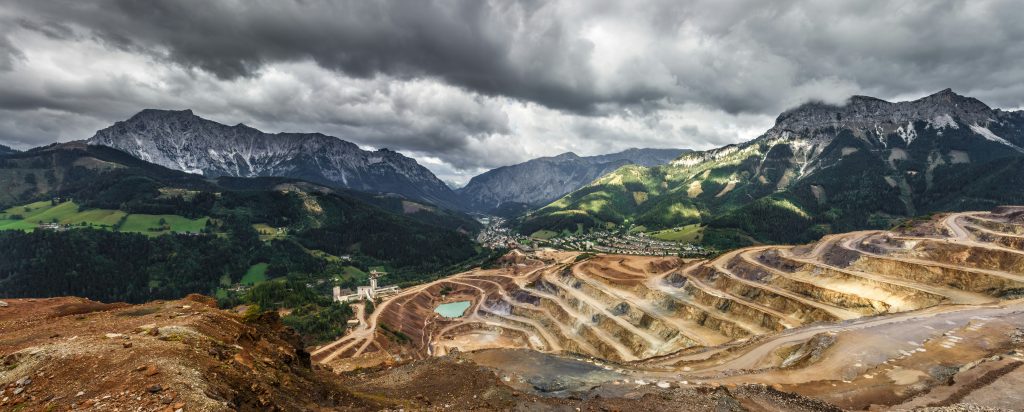
Acid mine drainage is the outflow of acidic water from precious metal or coal mines. There are more than 16 mines in the United States that are producing large volumes of AMD that needs to be treated. Environmental regulations are forcing newer mines to use modern technologies such as Reverse Osmosis (RO) to treat their AMD. There are over 200 RO plants around the world that are treating acid mine drainage, and all of them produce a concentrated residual brine waste stream, which is also a major environmental problem.
The No-BrinerTM + RO Pre-Treatment adaptation of the KNeW Process® involves treating water before it enters the RO process. Calcium and other positively charged ions (cations) bond with negatively charged sulfates and sodium (anions) in the AMD feed water. When combined, these positive and negative ions produce gypsum, which fouls the RO membranes. Membranes are the core of RO technology, but they are expensive and must be replaced when fouled. The No-Briner process first removes the cations before they enter the RO process, then extracts Sodium (brine) from the RO process and returns it to the feed stream, which recharges the membrane resins.
Based on data collected from the demonstration plant, computer modeling, and input from a major membrane manufacturer, KNeW estimates that removing calcium and all cations before the RO process can increase the quantity of clean water by as much as 15%, reduce the residual brine stream by as much as 15%, and potentially extend the life of the membranes by as much as 300%.

KNeW Demonstration Plant operating continually in South Africa since 2018
Combining the No-BrinerTM + RO Pre-Treatment with the KNeW Post-Treatment eliminates brine discharge streams entirely. Nearly 100% of the water is treated and converted into clean, fresh water. Evaporation accounts for approximately 2% of the total water processed. And with the KNeW Process® post-treatment application, valuable fertilizers and building materials are produced such as potassium nitrate, ammonium sulfate, gypsum and plaster of Paris. This application dramatically lowers operational costs of the RO process, while providing new revenue sources and environmental benefits that have the potential to change negative public perceptions of mining.
“The pre and post-treatment adaptations of the KNeW Process® comprise an end-to-end solution, for RO systems that increases their efficiency, extends membrane life, and lowers operational costs,“ said Aubrey Howard, CEO of the KNeW Company.
“We’ve been in conversations with leading membrane producers in the country and they are very interested in how the KNeW Process® will help increase efficiency and lower operational costs,” added Howard. “While the KNeW Process® has multiple applications for creating new sources of clean, fresh water, the application of our technology to the RO process is one of the most promising business opportunities for our young company.”
While KNeW’s technology can help mining operations solve their AMD problem, it is equally important that KNeW technologies also produce clean, fresh water and valuable fertilizers, plant nutrients and other commercial products, and it does it all without harming the environment. Mining companies can become environmental stewards, while creating new revenue opportunities by providing water to nearby farms and communities and by selling fertilizers on the open market.
###
About the KNeW Company
Born out of a passion to help communities thrive, the KNeW Company, LLC (KNeW Process®) was created to solve one of the world’s most critical problems–access to food and clean, fresh water.
We use proprietary and patented, environmentally responsible, processes to transform brackish water and acid mine drainage into valuable fertilizers and other plant nutrients and clean, fresh water while making the RO treatment process more efficient and economical.
">
Can a new ion exchange system cause a stir?
The following article was published in Global Water Intelligence Magazine and can be viewed here. A PDF of the article is available here.
Can a new ion exchange system cause a stir?
by Tony Wachinski, Wisewater Global
San Diego-based KNeW CompanyTM, formed in 2013, is bringing to market a variant on conventional ion exchange, aimed at treating brackish waters and mining effluents while creating a saleable fertiliser product. The product is targeted as both an alternative and complementary to RO.
Instead of a column configuration used in most ion exchange applications, the KNeW ProcessTM uses continuous stirred tank reactors running in a counter current configuration (patented as the Zik-ZakTM process) to treat high dissolved solids concentrations – up to 20,000 mg/L TDS is claimed. As well as a catex and anex ion exchange plant, the KNeW Process consists of a regenerant section and a chemical step to convert the regenerant into fertiliser and other by-products, such as potassium nitrate, ammonium sulphate, ammonium chloride and gypsum.
The technology has also been adapted into the No-BrinerTM process, which is used for RO pretreatment by removing the calcium from the feedwater so that only sodium sulphate or sodium chloride remain, reducing the threat of scaling on the membranes. The RO brine – consequently having a high sodium concentration – is used for regeneration of the calcium loaded IX resins. The KNeW chemical step is then applied to the regenerant to produce fertiliser.
The company has tested synthetic water of comparable quality to that found in groundwater around Rio Rancho, New Mexico, where the KNeW Process treated feedwater with 13,000 mg/L TDS, reducing it to 20 mg/L of sodium and chloride only. It has also tested performance on acid mine drainage at its demonstration facility in South Africa, claiming to produce “almost pure water” from a feedwater of 25,000 mg/L TDS.
Conversations are currently ongoing to duplicate its South Africa pilot plant at the Brackish Ground Water National Desalination Research Facility in New Mexico, as well as discussions with several mining companies. After third party validation of technology performance claims, the KNeW Company will be ready to enter the market and is seeking institutional and equity investors. A tentative agreement with a major fertiliser distributor has been agreed for offtake of potassium nitrate produced by the KNeW Process.
">
John Bewsey Featured in MechChem Africa Magazine

Industrial waste, biomimicry and the circular economy
The attached article appeared in the October 2019 issue of MechChem Africa magazine. KNeW Process® inventor, John Bewsey, is featured, and he provides a good technical overview of KNeW Co’s patented ion exchange process.
">
Cuba, New Mexico to Become First US City to Deliver Clean Water Using Efficient and Environmentally Responsible Ion Exchange Process
MOU between the city and KNeW Company will use construction and operation of water treatment plant to create new jobs in area
Cuba, NM, July 14, 2020 – The KNeW Company (KNeW®) announced today that it has signed a Memorandum of Understanding with the city of Cuba, New Mexico to build and operate a water treatment plant using KNeW’s patented ion exchange technology, KNeW Process®. The plant will be owned and operated by the KNeW Company and will create new, high-paying jobs for local residents.
The Technology
The revolutionary KNeW process® creates solutions for clean fresh drinking water and high-quality fertilizer products. It was originally invented to address the post treatment of Acid Mine Drainage from mining operations. But the core ion exchange technology, invented by chemical engineer John Bewsey, can also be used to treat contaminated water from brackish aquifers. KNeW is a ZERO discharge process, meaning that nearly 100% of treated water is converted into clean, fresh drinking water. Evaporation accounts for less than 4% of the treated water. The byproducts of the process–minerals extracted from the brackish water, such as potassium nitrate–are packaged and sold as agricultural fertilizers and other plant nutrients.
The Problem
Although the city of Cuba is geographically located directly over the Rio Puerco deep water aquifer, it cannot be used as a water source for the city. With over 13,000 parts per million of sodium, calcium, sulfates and other minerals, the aquifer water is not potable or usable for agriculture. Consequently, the city has been forced to pump water from a different, shallow aquifer. But not only is the water insufficient to meet the quantity needed by the community, it is also extremely poor quality.
“It’s been frustrating to know that we sit over an almost endless supply of water, but we cannot use it,” says Cuba Mayor Rick Velarde. “The solutions that the KNeW Company provide may literally be life savers for this town. With the KNeW process operating, we will not only survive, we will thrive.”
The Solution
The Rio Puerco aquifer is 2,700 feet deep and will supply Cuba with 450,000 gallons per day of clean, fresh drinking water after treatment. The Cuba water treatment plant is expected to treat over 183 million gallons of unpotable brackish water per year while producing over $13 million in revenue from fertilizer and surplus treated water sales. Surplus water can be stored and made available to local ranchers and farmers.
Once constructed, the operation of the plant will create new good-paying jobs for local residents. The plant will create as many as 30 new jobs with annual payroll estimated to be $700,000. KNeW will manage the fertilizer production and sales.
“We are very excited about the potential of the Cuba treatment plant,” says KNeW Company CEO, Aubrey Howard. “The future of Cuba, New Mexico looks bright for the first time in many years. Providing clean water to the town supports our mission to help communities thrive. But the economic impact our plant will have in the form of new jobs and industry means that the town can grow. We’re extremely proud of that.”
Next Steps
The City and KNeW have qualified for special funding programs from the USDA, EPA and New Mexico State Water Revolving Fund. The City and KNeW will determine the best source for funding. The KNeW Company is currently working on the Feasibility Study, which is required to secure funding.
“This is just the beginning of the potential applications of the KNeW technology to solving water poverty problems,” said Howard. “And we are certain that our technology has applications around the globe. We are part of the solution of lifting people and countries out of water poverty and improving public health and safety throughout the world through access to clean, fresh drinking water.”
###
About Cuba, New Mexico
Cuba is a village in Sandoval County, New Mexico, in the United States. As of the 2010 census, the village population was 735. It is part of the Albuquerque Metropolitan Statistical Area. Located off the busy 550 highway, Cuba has several motels, restaurants and bars. In 2005 and 2019, the National Christmas Tree was harvested from the Santa Fe National Forest near Cuba.[2]
">
Cuba counts on new facility to treat its brackish aquifer water

CUBA – Richard Velarde once spent hours with a wire hanger in hand, slowly scraping away the calcium deposits in his water heater. It’s a common water problem for the Village of Cuba, where Velarde is serving his second stint as mayor.
“Sometimes you open your faucet and nothing will come out because the buildup is so bad,” he said. “The little sprayer hoses on the side of the sink – you can’t use those here. You better have filters if you want to save your water heaters and washing machines.”
Now the rural community has a potential solution for its water woes – one that could also help other cities and towns in New Mexico improve their water quality.
The water department’s wells and tanks date to the 1960s, meaning the town of fewer than 800 people in Sandoval County is constantly repairing and replacing valves and pipes.
“It seems like all I deal with is infrastructure here,” Velarde said. “Repairs are so expensive. It’s hard enough for small towns to pay the bills sometimes, so that doesn’t leave a lot for things like engineering estimates.”
When a company approached Velarde with an offer to build a facility and treat water pumped from the brackish aquifer beneath the village, he jumped at the opportunity.
Cuba signed a memorandum of understanding in May with the KNeW Co. to build a plant that would pump and treat water from the aquifer, providing at least 450,000 gallons of water a day to the village.
But the salty water is laden with calcium, sodium and sulfates. Big cities such as El Paso and San Diego treat brackish groundwater with desalination. That’s not an option for rural Cuba, with its four-person water department.
“Desalination is expensive,” said Aubrey Howard, co-founder and CEO of the KNeW Co. “Little villages can’t afford reverse osmosis plants and the energy requirements that come along with that.”
Desalination also produces large amounts of brine.
Instead, the plant will use KNeW Co.’s ion exchange technology pioneered by John Bewsey, a South African chemical engineer and technical director at Trailblazer Technologies. KNeW stands for “potassium nitrate ex waste.”
Water tanks are filled with small resin beads act that like little magnets, pulling out the sodium, calcium or magnesium in brackish groundwater or mine wastewater.
One set of tanks removes all the positively charged ions, which attach themselves to the beads.
Negatively charged beads in another tank remove chlorides and sulfates.

“You’re left with water which is neutral and has nothing dissolved in it,” Bewsey said. “The trick that we came across is to convert all those unwanted ions – which in the past nobody knew what to do with – we convert them into fertilizer. In particular, the one that is valuable is potassium nitrate. That pays for all the trouble that you’ve gone to take those dissolved solids out of the water.”
The fertilizer side of the plant means the company turns a profit even without selling the treated water. This allows KNeW to provide clean water to Cuba, free of charge.
Cuba and KNeW Co. may apply for grants with the U.S. Department of Agriculture and New Mexico to help finance the plant. The company would like the facility to be in production by the end of 2021.
After the $10 million water treatment plant is built, Cuba would own and operate the facility. The company would manage the “waste” at the adjacent fertilizer plant.
Bewsey uses his technology to treat acid mine drainage and brackish groundwater at a pilot plant in Johannesburg.
The plant has tested the ion exchange method on water with the same makeup as the Rio Puerco aquifer.
The process “worked beautifully,” Bewsey said, and it cleans the water so thoroughly that some minerals will have to be added back in to meet drinking water standards.

The Cuba project is the first attempt by the California-based company to expand the use of Bewsey’s technology into North America.
A New Mexico State University professor and water scientist serves as a technical adviser for the company, which first began looking at the Rio Puerco aquifer several years ago.
The Cuba project builds on a 2011 study of the aquifer commissioned by Sandoval County.
Levi Casaus Jr., an operator with the Cuba water department, said the new infrastructure and a cleaner water supply could help break the costly repair-and-replace cycle for municipal lines and home appliances.
“We have hard water even after filtration,” Casaus said. “You’ll see the calcium buildup in your sink, shower head and water heaters. We also get blockages in our meters and municipal lines. It costs a lot of money to repair and replace those, and it also means we’re wasting water.”
The Cuba system has two water tanks, which are on separate land from the pumping and treatment site. The older wells get less productive each year, so it is a struggle to fill both tanks and maintain good water pressure.
“We have some areas where if the tank pressure drops, they simply don’t get water,” Casaus said. “When water levels go the other way and get too high, we get leaks and full breaks in our lines. It’s a balancing act. We’re playing with the cards we’ve been dealt.”
A central plant closer to the village would address those water quantity and pressure problems.
The proposed plant would include two wells to pump 2,700 feet down into the aquifer, tapping into a much larger water source than what Cuba can currently pump 700 feet down in a separate aquifer.
St. Johns, Arizona, has also signed a memorandum of understanding with KNeW Co. to build a similar plant to convert brackish aquifer water into drinking.
Mayor Velarde said the construction, along with steady jobs at the water plant and gross receipts taxes from the fertilizer plant, could help the economy of Cuba, where the roads are lined with long-closed businesses.
“We’ve got to try something different,” Velarde said. “We’re getting by with what we have right now, but we have an opportunity for it to be better. A cleaner water supply would mean a lot for this community.”
">
KNeW to clean Cuba-area water, develop economy
The KNeW Company stays mindful of the bigger picture in improving the Village of Cuba’s water quality, notably, the ripple effects for possible economic and infrastructure development, leaders say.
Improved water quality in local hotels can lead to more pleasant showers for guests, better-tasting food at restaurants and no calcium buildup in pipes.
“When water deteriorates, everything tends to follow. When the water quality improves, we suspect that everything will improve along with that, as well,” said Aubrey Howard, the co-founder and CEO for KNeW.
According to its website, KNeW is a San Diego-based company that transforms brackish water and acid mine drainage into valuable fertilizers and clean drinking water by using environmentally responsible processes.
The technology was developed in South Africa with a combination of South African government and private equity financing, according to the website. The company’s New Mexico facility is in Cuba.
Jason Griego, who oversees the Cuba facility, said the primary objective is to remove the excess salts and minerals from water and convert them into fertilizers. He said the byproduct would be pure water.
“We have no emissions, if you will. We have no wastes in what we’re doing. There’s nothing that’s going to be wasteful or cause an environmental issue. One hundred percent of everything that we produce will be used,” Griego said.
He also said the only waste would be two tons of sodium chloride, i.e. table salt, which can be used to de-ice New Mexico’s roads during the winter.
Griego said the immediate economic impact of KNeW is 15 permanent jobs at its fertilizer facility, as well as at least five jobs at the ion exchange plant run by the Village of Cuba.
Aside from how homes and businesses will benefit, he said the cleaner water will help attract new residential construction to Cuba.
“The key component is having clean water. If you talk to most of the business owners in Cuba, one of the big issues there is water,” Griego said. “We do currently have businesses that are asking, ‘What’s the production? Are X, Y and Z businesses allowed to come in and tap into that water?’… I can tell you there’s other businesses already looking at coming into that area.”
Howard said the facility will also help farmers because they won’t have to fully rely on seasonal rainfall to grow their crops.
He said KNeW can help bring an additional 20 million gallons of water a day to Rio Rancho, which consumes about 18 million gallons of water daily during the summer.
Griego said of the $17 million in annual fertilizer sales, roughly $980,000 will go to the Village of Cuba and Sandoval County via gross receipts tax money.
Cuba Mayor Richard Velarde wrote in a May 24 letter to the U.S. Department of Agriculture’s Rural Development program that “Cuba has a serious water problem that does not lend itself to conventional solutions” and the municipal water infrastructure and tanks “are fouled with calcium buildup.”
“The village’s water has a rising level of arsenic, and there are high levels of iron, sulfur and mineral salts. Without a new source of water for drinking and economic development, Cuba will not survive,” Velarde added.
Griego said if one turns on a water faucet in Cuba, the water smells like boiled eggs. Therefore, most residents drink bottled water, he said.
“(A 2017 study) shows that those storage containers (that) have a million gallons of water are deteriorating. I’m talking six to 10 inches thick of calcium buildup on the bottom of it. Those tanks are rusting,” he said. “This didn’t happen overnight. This has been going on for years and years.”
But now KNeW can clean the dirty water from the local deep-water aquifer, he said.
Howard said businesses in Cuba are depending on water softeners because of the poor water quality.
“(Hotel guests) smell like eggs after they shower. Their toilets oxidize brown from the iron in the water,” he said. “When you change this corrosive water that’s going through their systems that requires them to change out their water heaters, it’s going to have an indirect economic impact on the residents alone.”
Griego said Cuba is signed on to have KNeW produce 515,000 gallons of clean water per day for the town. He also said the village already produces 500,000 gallons from its wells.
“We can actually both clean our source and also clean theirs, which would give the village about 1.2 million gallons of water per day,” Griego said.
Griego said the project has garnered support from the Sandoval County Commission, Cuba’s Village Council, Cuba residents, U.S. Sen. Ben Ray Luján and U.S. Rep. Teresa Leger Fernandez.
“We rely on the fertilizer for profitability, and any water sales generated is a bonus. That’s why we’re able to form this partnership with Cuba,” Howard said.
Cuba owns and uses the water, while KNeW owns and uses the waste that comes from the facility, Howard said.
“They’ve not only got high-quality water, but they’re getting it at zero cost,” Howard said.
Howard said KNeW’s waiting for the formal OK to remove brackish water from the ground and generate clean water. From there, clean water will be sent to Cuba, while the waste will go to KNeW’s facility.
A $6 million study conducted by Sandoval County in 2011 reports that the aquifer under the county is a confined brackish water aquifer at a depth of 2,700 feet. Testing and analysis revealed at least 576,000 acre-feet of recoverable water, and the aquifer may store up to 2.6 million acre-feet of recoverable water.
An acre-foot is almost 326,000 gallons, enough water to cover an acre of land a foot deep.
Sandoval County had been looking at shipping waste from cleaning dirty water to Texas, he said.
Although KNeW is entitled by law to have senior rights to the aquifer, Howard said the company’s philosophy is that communities like Rio Rancho and Cuba should have senior rights on what to do with the water supply.
Howard said the Cuba project costs $20 million. He said $13 million will go toward the fertilizer plant, with the remaining $7 million for the ion exchange plant.
Howard said KNeW put in an application with the USDA for a low-interest loan, qualifying for $13 million. The Village of Cuba must fund the other $7 million.
Lujan, Fernandez, county officials and village officials pledged to help the community raise that money, Howard said. He also said once Cuba does so, the project will kick off.
“All things being equal, if we keep going the way we’re going right now, I suspect it’ll be in the next two to three months,” Howard said.
">
Mt Woodson Golf Club Sees Dramatic Water Improvement with Axbold Nanobubble Solution

Demonstrated Success of State-of-the-Art KNeW® Nanobubble Technology at Mount Woodson Golf Club Leads to Dramatically Improved Water Quality
The Cost of One KNeW Nanobubbler is Equivalent to .03% of the Average Annual Golf Course Maintenance Expenditure*
Media Contact: Bruce Gryniewski
Cell Phone: (206) 409-7138
Email:BruceG@gallatinpa.com
San Diego, CA, March 13th, 2023 – The KNeW Company (KNeW®) announced today that Mt. Woodson Golf Course purchased additional KNeW Nanobubblers following the successful results it achieved on the golf course’s irrigation ponds. The additional Nanobubblers will be put into service on another of the golf course’s ponds that supports fish and other wildlife.
Mt Woodson is a world-renowned 6000-yard par 70 golf course set in the rugged natural setting of Northeast San Diego County. Unfortunately, the course’s irrigation ponds that also serve as water features were contaminated and experienced severe algae blooms during the summer months.

Golf course ponds can become contaminated with pollutants from various sources, such as fertilizer runoff, sedimentation from surrounding land, and other pollutants from operations. Some common sources of contamination in golf course ponds include nitrogen and phosphorus, heavy metals, and organic pollutants such as oil and grease. The presence of these contaminants can lead to the growth of harmful algae and bacteria which can negatively impact water quality and harm fish and other wildlife that may depend on the pond.
Anaerobic sludge can also accumulate in golf course ponds due to natural decomposition of organic matter. This can lead to the growth of harmful microorganisms, the depletion of dissolved oxygen levels, and poor water quality.
*Golf Course Industry Magazine. January 2020.
Mt. Woodson uses the ponds to water grass, trees and other vegetation, so the contamination problem keeps repeating and getting worse. The KNeW Nanobubble technology provided the solution the golf course needed.
“Prior to installing KNeW Nanobubblers in our ponds, the water was brown, odorous, unhealthy for fish and wildlife, and it detracted from the beauty of our renowned golf course,” said Daryl Driscoll, Mount Woodson Golf Club owner. “KNeW Nanobubble technology has dramatically transformed our golf course ponds, significantly improved water quality and clarity, eliminated odors, and made our ponds once again safe for fish and wildlife.”
“The invention of nanobubbles has changed the way golf courses can improve water quality and manage anaerobic sludge in ponds and other water features,'” said Aubrey Howard, CEO of KNeW Nanobubbles. “It is by far the most efficient and affordable method to improve water quality and make golf course pond management less costly and more productive.”
Mount Woodson installed a KNEW nanobubbler on its primary irrigation pond (pond #5), which had three feet of anaerobic sludge at the bottom, resulting in massive algae blooms. KNeW’s nanobubbler removed almost all of the sludge, and Mount Woodson’s irrigation pond has gone from anaerobic to aerobic within five months – resulting in improved water quality and clarity and safety for fish and other wildlife.
“In the summer months, the pond would become overrun with algae,” said Kelly Halsey, Mount Woodson Golf Club superintendent. “After five months of treatment, the KNeW Nanobubbler removed two and a half feet of anaerobic sludge-in some locations all of the sludge-and the pond has not had an algae outbreak since.”
Nanobubbles are extremely small bubbles, typically measuring less than 100 nanometers in diameter. They have unique characteristics that distinguish them from larger bubbles and allow them to effectively create an aerobic environment throughout the entire water column. Aerobic bacteria are microorganisms that require oxygen to survive and grow. In contrast, anaerobic bacteria do not require oxygen and can thrive in environments with low oxygen levels, such as anaerobic sludge. In a pond ecosystem, aerobic bacteria help to decompose organic matter and improve water quality and clarity. They also help to reduce the buildup of anaerobic sludge by consuming organic matter before it has a chance to accumulate on the bottom of the pond.
KNeW nanobubble technology has significant competitive advantages over other nanobubble technologies on the market. These include:
- KNeW nanobubblers provide 72% greater aeration capacity than competing technology
- KNeW = 45.4 GPM
- KNeW nanobubblers use 79% less energy than competing technology (KNeW 2.7 kwh)
- Supports single/3-phase (120/240V)
- KNeW nanobubblers require 90% less maintenance service-time than competing technology
- Just 2 moving parts resulting in reduced wear
- KNeW nanobubblers are more mobile than competing technology
- Portable, allowing for in-situation deployment
- Requires less permitting, equipment and space
“KNeW’s nanobubble technology has a wide range of applications beyond golf course ponds, including cleanup of waste-water treatment ponds, treatment of mine wastewater, and improving growing conditions at fish hatcheries,” said Howard. “And we currently have KNeW Nanobubblers operating at waste-water treatment facilities at Lake Patagonia, AZ and Caballo Lake, NM. And we just began a pilot project to improve fish growth at the Mora national fish hatchery in New Mexico.”
###
About the KNeW Nanobubbles
KNeW Nanobubbles continues its parent company’s mission to help communities thrive. Nanobubble technology provides revolutionary water purification and treatment solutions that promote water recovery, reuse, and recycling in a wide range of applications.
We use proprietary and patented, environmentally responsible processes to transform contaminated water into clean, fresh water. For more information visit us at: https://knewnanobubbles.com
">